
The Boys, The Critical Drinker, and the Writer Who Stopped Contorting

Kwami-Fattah-al-Sissi
The Argument That Started Everything
The Critical Drinker, one of YouTube's most prominent film critics, released a video in 2024 titled "The Boys — Why Did Fans Turn Against It?"— a takedown of Season 4 that became a flashpoint in an ongoing cultural debate about politics in storytelling. His thesis was clean, sharp, and delivered with the confidence of a man who believed he'd already won the argument: The Boys had stopped being subversive and become the very thing it once mocked. The characters had flattened into parodies. The satire had calcified into partisan lecturing. And showrunner Eric Kripke's response to criticism — effectively, "go watch something else" — was proof that the show had abandoned its audience in favor of ideological self-congratulation.
The audience score on Rotten Tomatoes seemed to validate him. Season 1 sat at 90%. By Season 4, it had cratered to 51% — the show's lowest mark ever, even as critics awarded it a 95% aggregate score. The gap looked like evidence of a show that had lost its way, propped up by institutional approval while the actual viewers headed for the exits.
It was a compelling argument. It was also, in important ways, incomplete.
The Case Against the Drinker
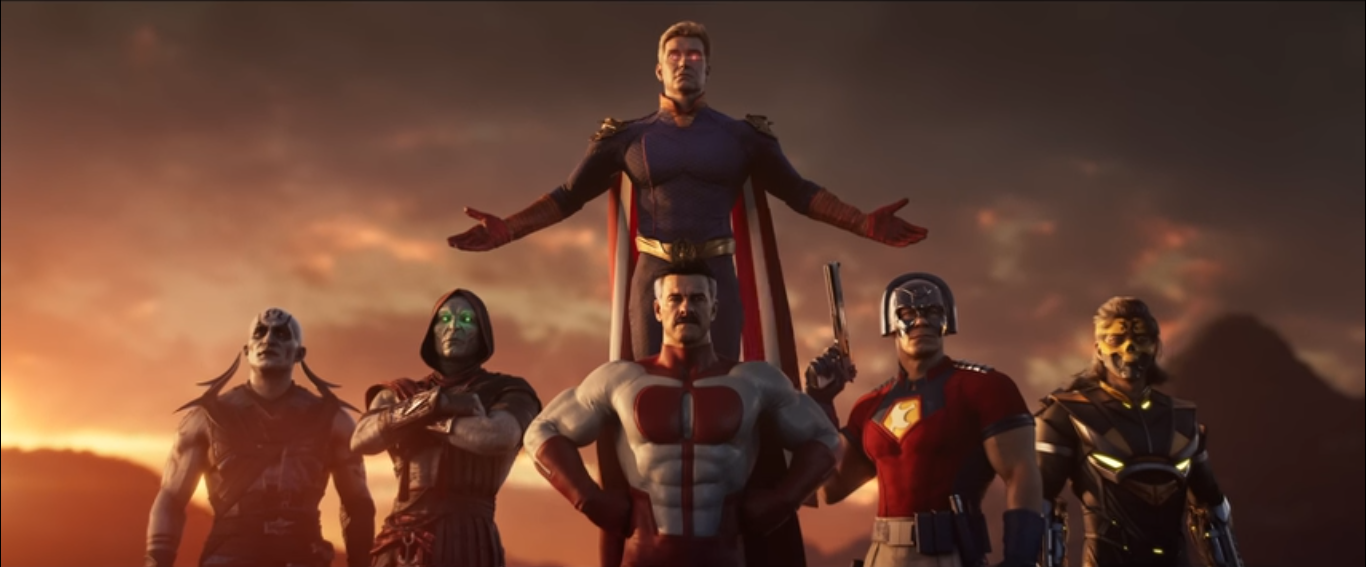
The Critical Drinker's critique rests on a foundational assumption: that The Boys underwent a dramatic tonal shift — that the early seasons prioritized story and character while the later seasons prioritized messaging. But this framing has a problem. It requires you to believe that Homelander was not always a Trump proxy. That Vought was not always a metaphor for corporate nationalism. That the show's political architecture was ever subtle enough to be missed by anyone paying attention.
It wasn't. From the first season, Homelander was a powerful figure desperate for public adoration, obsessed with what people said about him, wrapping authoritarian impulse in the language of patriotism. The political commentary was never the wallpaper — it was the load-bearing wall. What the Drinker diagnosed as a shift from "story" to "politics" may have been something else entirely: reality catching up to the fiction so dramatically that the allegory stopped feeling like allegory and started feeling like a mirror.
And mirrors make people uncomfortable.
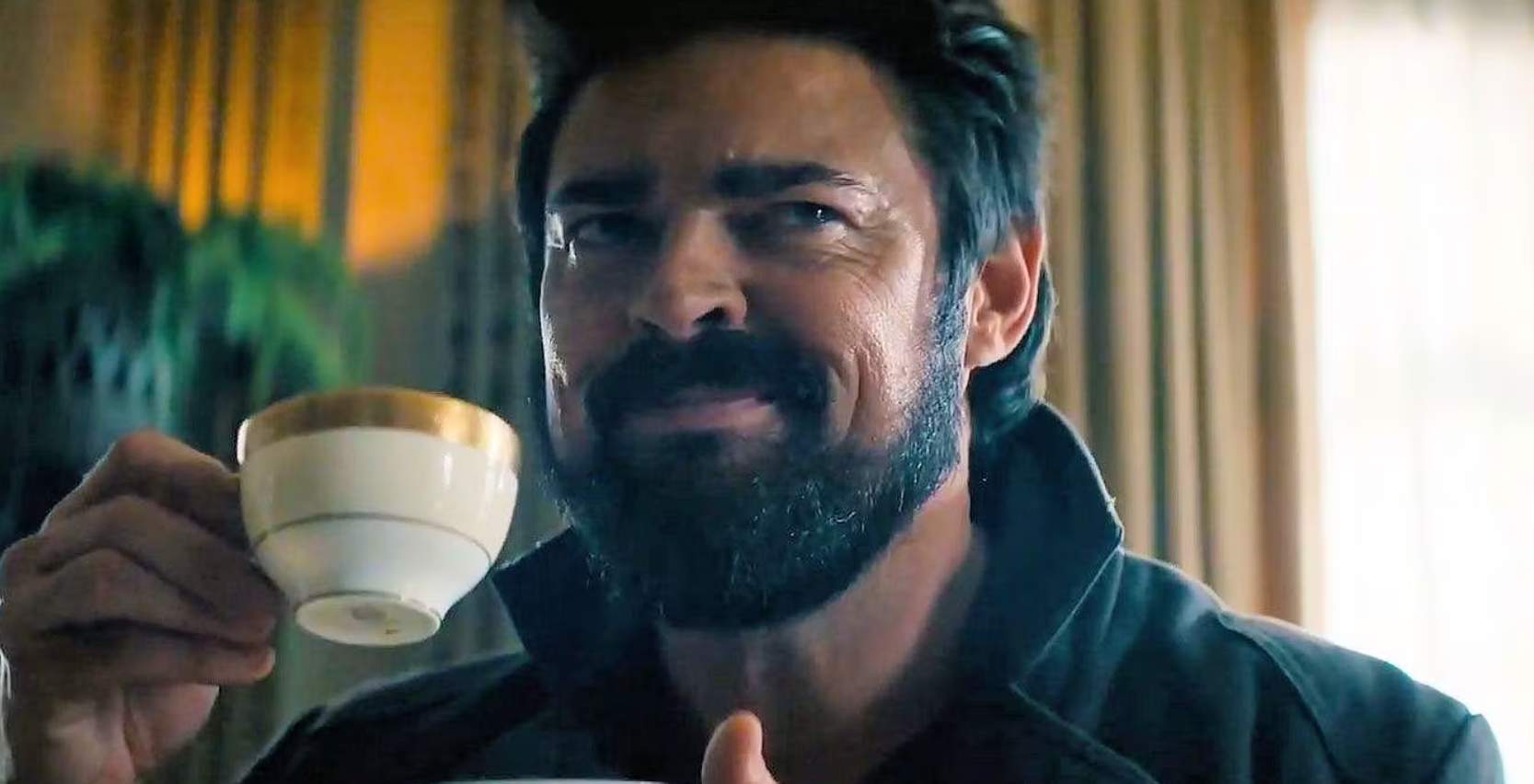
Consider what Season 4 actually delivered in terms of character work. Butcher's arc — a man becoming the monster he swore to destroy while his own body wages war against him — is pure prestige drama. A-Train's trajectory from complicit coward to someone groping toward redemption is earned across seasons of setup. Homelander's return to the lab where he was made, where we simultaneously sympathize with and are repulsed by the creature — that is not a scene that exists "primarily to deliver political commentary." That is a scene about the origins of trauma and the impossibility of escaping what made you.
Then there's Firecracker — a character who, in a show the Drinker accuses of one-sided politics, is given genuine psychological depth. Her admission that she gives people purpose, the cost she's willing to pay for Homelander's approval, the moment she sits in the empty seat and you can see her silently asking whether any of it was worth it — these are not the marks of a show that has abandoned characterization.

CBR
And here is the point the Drinker's critique most conspicuously avoids: the show cuts both ways. Starlight's coalition is shown as disorganized and ineffective. The left, in Kripke's telling, is impotent — morally righteous but operationally useless. The satire of progressive futility is right there on screen. To frame The Boys as one-sided partisan lecturing requires ignoring roughly half of what it's actually saying.
The audience score drop is real, but Drinker's interpretation is selective. As multiple respondents noted, the Drinker admitted he hadn't actually watched Season 4 — his critique was assembled from Twitter discourse and Rotten Tomatoes reviews. Pacing issues, Frenchie's restructured arc, and legitimate complaints about plot density all contributed to audience dissatisfaction. Reducing the entire decline to "politics ruined the show" flattens a complex picture into a bumper sticker — ironically, the very thing the Drinker accuses Season 4 of doing.
What West Wing Knew and What Disney Forgot
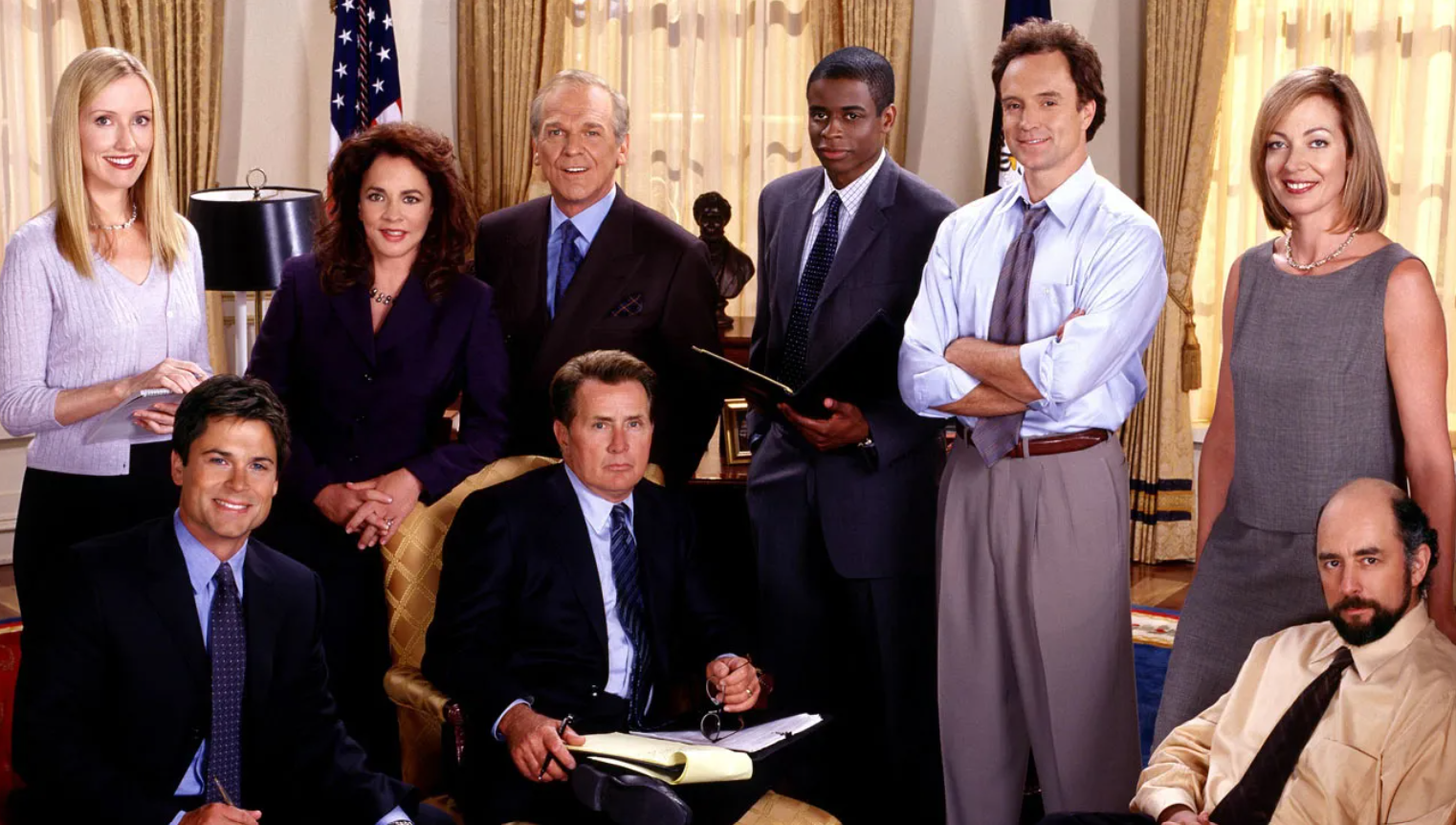
There is a distinction — and it matters — between a show built from its foundation as political commentary and a franchise that has ideology injected into it after the fact.
The West Wing was never accused of hiding its politics. House of Cards never pretended to be neutral. These shows were born political, and audiences signed up knowing the deal. The Boys belongs in this category. Its political DNA was present in the pilot and has been expressed with increasing directness ever since.
This is fundamentally different from what happened with Disney's Star Wars sequel trilogy or Rings of Power — properties with decades of established canonical identity that were retrofitted with contemporary messaging in ways that felt foreign to the material. When audiences pushed back on those, the complaint was genuine: you took something that existed for its own reasons and turned it into a vehicle for something else.
The Boys never had that problem because the vehicle and the message were always the same thing. To say in Season 4, "Why is this so political?" is to ask the question you should have asked in Season 1. And if you didn't ask it then, that says more about what you were willing to see than what the show was willing to show.
The TED Talk Problem: A Writer's Confession

Unsplash
This debate about The Boys would remain purely academic if it didn't intersect with something more personal — the actual craft of writing stories that carry ideas without collapsing under their weight.
I know this problem intimately because I lived it.
For years, I wrote what I thought was drama. Characters would enter scenes and articulate philosophical positions with eloquence and precision. The world-building was meticulous. The themes were layered. And the feedback I received — from collaborators, from critics, from the AI tools I used to workshop my writing — was devastating in its accuracy: "This sounds like a TED talk."
Crushed. But correct.

Anton Kotlovskii
The issue wasn't that I had nothing to say. The issue was that my characters were mouthpieces rather than people. They arrived fully formed, spoke in thesis statements, and resolved their conflicts through intellectual superiority rather than through struggle, failure, and the messy business of being human. They were, in the most damning sense, Mary Sues of philosophy — characters who existed to be right rather than to be real.
I had to start over. I had to learn something that every screenwriting manual teaches but that philosophical writers resist with every fiber of their being: characters must begin imperfectly, move through resistance, and earn whatever wisdom they arrive at. You cannot skip the bruise and go straight to the insight.
Two Scripts, Two Writers, One Person

The evidence of this journey lives in two scripts that represent the poles of my creative identity.
"John Paul Jones" is the script I wrote after absorbing that criticism. Set in 1774 Nantucket, it follows Reuben Chase — a young man on the edge of a revolution he can barely name. His father Jedediah teaches him to splice rope and read men's faces. A Quaker girl named Eliza tells him to write himself honestly or not at all. The philosophy is there — "Not all storms blow from clouds, boy. Some ride in the hearts of men" — but it arrives through character, through relationship, through the salt air and the weight of a marlinspike in a boy's uncertain hand. The ideas serve the people. The people don't serve the ideas.
"Triumph" is the script where I stopped contorting.
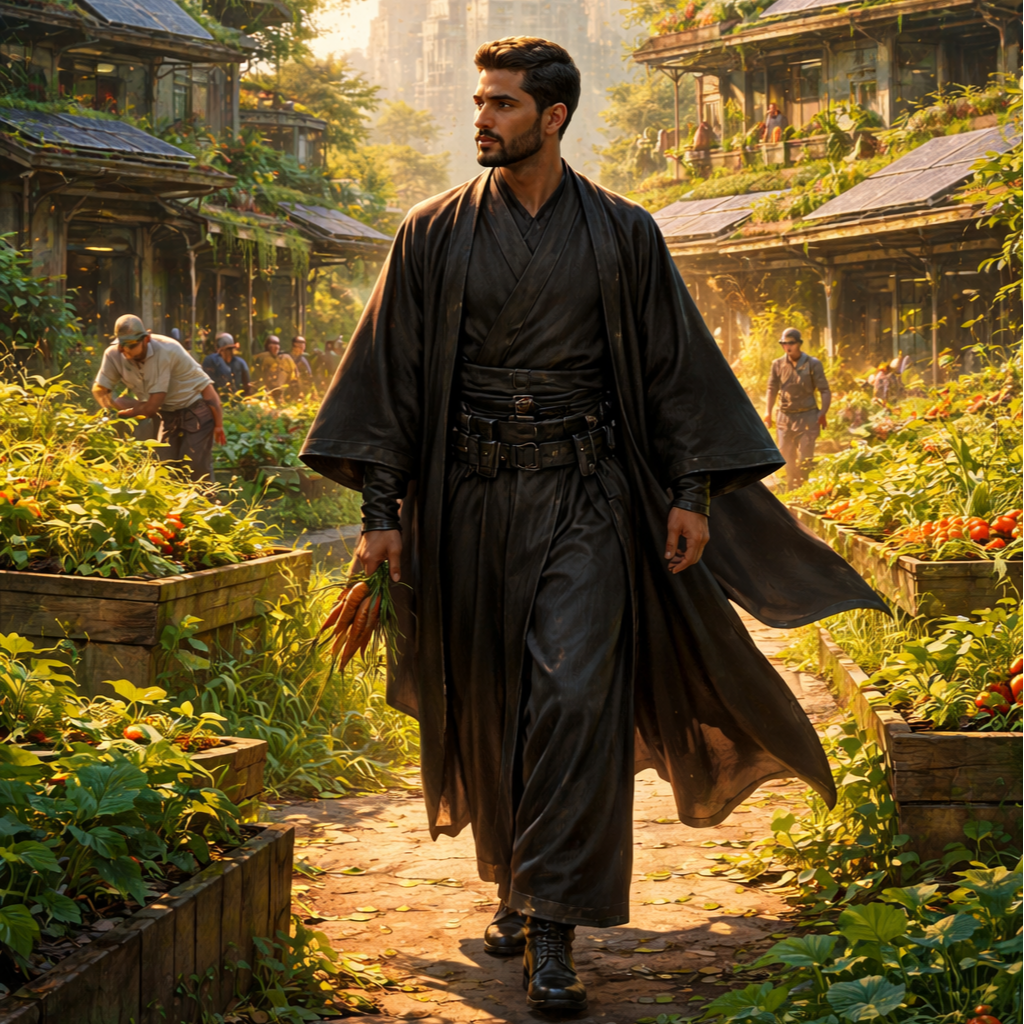
Set in a speculative future, "Triumph" opens with Intindia — a wave engine designer lying half-asleep with chalk dust on her fingers — telling Thrune that the offshore workers don't want to come home. Not because they're forced to stay. Because returning makes them feel misaligned. "You call it separation," she says. "They call it relief."
This is a scene where philosophy generates the character rather than the character generating the philosophy. The commentary — about systems, alignment, belonging, the cost of coherence — is the architecture of the world. And yet it works, because Intindia and Thrune are real people inside that framework. You feel their relationship, their rhythms, the small domestic gestures (a smack on the ass, a quick kiss, the silent observation that she didn't wake him) that ground the ideas in human warmth.
Later, the character Raj — a transhumanist convicted of... something we're left to infer — sits across from a psychotherapist on an island that feels nothing like a prison. He insists evolution requires force. The therapist doesn't argue. She simply asks: "What does 'evolve' require of you... here... today?" And Raj, for all his ideological armor, begins to crack. Not because he's defeated. Because the environment is doing something to him that his philosophy can't explain.
This is what I was always trying to write. Not prestige drama with philosophy sprinkled on top. Philosophical speculative fiction where the ideas are the world and the characters must navigate that world with all the imperfections, resistance, and earned growth that any good drama demands.
The Lesson The Boys Taught Me About My Own Work

Rahul Chavan
The Critical Drinker is not wrong about everything. When commentary-driven storytelling lacks craft — when the characters flatten, when the dialogue becomes didactic, when the writer mistakes having a message for having a story — the result is exactly the kind of hollow, self-congratulatory content that alienates audiences. We have all watched shows and movies where this is precisely what happened.
But the Drinker's error is in assuming that commentary-driven storytelling is inherently inferior to character-driven storytelling — that the only legitimate approach is to bury your themes so deep that the audience discovers them like archaeologists rather than encountering them like travelers walking through a city someone built with intention.
Some writers build cities. Kripke built one with The Boys. The streets are named after real political figures. The buildings look like the ones outside your window. The citizens behave the way your neighbors behave. And when you walk through it and feel uncomfortable, that discomfort is the point — not a failure of craft but an expression of it.
Master Kamal Srinivas
I spent years trying to be a different kind of writer. I tried to build dramas where the philosophy was invisible, where the characters drove everything and the ideas followed. And I produced good work that way — "John Paul Jones" is a script I'm proud of. But it cost me something. It cost me the natural shape of my creative voice.
The real lesson from debating the Critical Drinker about The Boys was not about who was right. It was about what it taught me about my own relationship to craft. I am not a prestige drama writer. I am a philosophical speculative fiction writer who has learned — through painful, productive criticism — that characters must be beaten up, must struggle, must earn their realizations through imperfection rather than arriving pre-assembled.
The answer was never to abandon my voice. It was to discipline it.
"Triumph" and "John Paul Jones" are not contradictions. They are the two hands of a writer learning to hold the same pen differently depending on what the story demands. And The Boys — love it or hate it, Season 4 included — gave me permission to stop apologizing for the hand that reaches for ideas first and characters second, provided I never stop doing the hard work of making those characters breathe.
Art, Mirrors, and the Cost of Honesty

There is an old provocation in the art world: a cross placed upside down in a jar of urine. It disgusted people. It also made them talk — about faith, about irreverence, about what we're willing to protect and what we're willing to destroy. The value of provocative art is not that everyone agrees with it. The value is that it refuses to let you walk away unchanged.
The Boys Season 4 is not subtle. Eric Kripke has said as much. But subtlety was never the contract the show made with its audience. The contract was honesty — a willingness to hold up a mirror to American culture and let the reflection speak for itself. When truth becomes more provocative than fiction, the problem is not with the artist. The problem is with what we've become.
The Critical Drinker wanted a show that unified its audience through entertainment. That is a legitimate desire. But some stories are not built to unify. Some stories are built to illuminate — and illumination, by its nature, casts shadows. The question for every writer is not whether your work will make people uncomfortable. The question is whether you've earned the right to make them uncomfortable by doing the hardest work first: making characters that feel like people, not positions.
That is the question I carry into every scene I write. And it is the question that turned a debate about a superhero show into a reckoning with my own voice as a storyteller.
