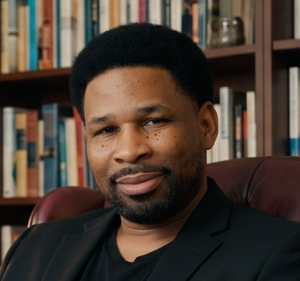
Picture by Mauro Fabio Cilurzo from Unsplash
Welcome to today's episode, where we explore a practical path for navigating our complex, fast-changing world: the Enlightened Lifestyle Methodology. I am your host, Dathan Turner, founder of the Enlightened Lifestyle, and today's topic is: Why is the title of this overall practice called the Enlightened Lifestyle? You know when people hear the word enlightened, their minds jump almost immediately to something esoteric. Mystical. Otherworldly. We picture a solitary yogi sitting in a Himalayan cave, bathed in supernatural light, having severed all ties to mundane existence. We imagine an exotic, altered state of consciousness that permanently lifts us above rent, relationships, traffic, and dirty dishes.
In the Enlightened Lifestyle framework, we reject that fantasy entirely. An enlightened life is simply the awake life. And awakening, far from being an esoteric escape hatch, is something profoundly humdrum. Ordinary. Down-to-earth. It is truly nothing special — yet actually living it makes all the difference in the world.
Which raises the questions this episode will follow.
What does nothing special actually mean in practice? Does it connect with the historical Buddha's own teaching? And why the second word — lifestyle?
PART ONE — "NOTHING SPECIAL": THE ORDINARY MIND IN ZEN
If you trace this insight through the Zen tradition, particularly one unbroken line in the Zen tradition, you find a steady, refreshing refusal to indulge in spiritual romance.
Take Charlotte Joko Beck, author of Everyday Zen and Nothing Special. Joko Beck spent decades cutting through her students' spiritual fantasies. She reminded practitioners that practice isn't about attaining bliss or ascending to some rarefied plane. It is about washing the dishes. Paying attention to the tightness in your stomach when someone insults you. Showing up fully for the life you already have.
Her student, psychiatrist and Zen teacher Barry Magid, takes this even further in his book Ending the Pursuit of Happiness. Magid diagnoses what he calls the curative fantasy — the secret, unconscious hope that meditation will magically fix our flawed personalities, eradicate our emotional messiness, and grant us psychological invulnerability.
And Magid points to teachers like Taizan Maezumi Roshi to prove the point. A profoundly deep koan master. A teacher of teachers. And a man who nevertheless struggled with severe alcoholism and complicated personal relationships.
Why?
Because realization does not bypass our human conditioning. Awakening doesn't replace the ordinary human psyche. It forces us to finally embrace it without defense. Now, there is more to the practice than "embracing life without defense," which could be seen as a blind spot if taken too far.
It is a point that I explored in my blog titled "Critique Magid’s “Ending the Pursuit of Happiness,” but the starting point of navigating ordinary life well is a good place to begin.
This grounded realization sits at the core of one of the most famous dialogues in Zen history — the encounter between Joshu and his master, Nansen.
Joshu earnestly asked Nansen, "What is the Way?"
Nansen answered, "Ordinary mind is the Way."
Joshu asked, "Should I direct myself toward it or not?"
Nansen said, "If you try to turn toward it, you go against it."
Joshu asked, "If I do not try to turn toward it, how can I know that it's the Way?"
Nansen answered, "The Way does not belong to knowing or not knowing. Knowing is delusion. Not knowing is a blank consciousness. When you have really reached the true Way beyond all doubt you will find it as vast and boundless as outer space. How can it be talked about on a level of right and wrong?"
At these words, Joshu was suddenly enlightened. Ordinary mind. Not a mind we manufacture. The mind that is already here.
When I began my own journey, I had a similar intention from the start as well. Coming out of the Christian tradition, I wanted a quote-unquote spiritual practice which I could bring into daily life. Not a spiritual practice which required faith, but one which centered on practice. That intention led me to various traditions, and if I had met how Magid and Beck practiced Zen, that would have been very close to what I was looking for in my journey. However, through struggle and confusion within a different tradition, I craved insight about how to practice.
The turning point came on a very ordinary day, walking down Hudson Street. I cleared my mind and resolved that reality itself — whatever was right in front of me — would be my teacher from that moment on.
I looked around. And what did I see?
I saw the cracked concrete of the sidewalk. The peeling paint on old houses. I saw impermanence, conditionality, and life happening directly — raw and unadorned.
There was no trumpet sound. No mystical vision. It was completely ordinary.
But that humdrum realization was clarifying. Awakening begins right here. In the midst of conditions.
PART TWO — DOES THIS CONNECT WITH THE HISTORICAL BUDDHA?
Now, traditionalists might ask a fair question.
Is this ordinary mind just a later Zen poetic invention? Or does it connect directly with what Gotama the Buddha actually taught?
The answer is an emphatic yes.
When the historical Buddha defined the engine of awakening, he laid out the Seven Factors of Awakening — the Bojjhaṅga.
Mindfulness — Sati.
Investigation of phenomena — Dhamma-vicaya.
Energy — Viriya.
Joy — Pīti.
Tranquility — Passaddhi.
Concentration — Samādhi.
Equanimity — Upekkhā.
Ask yourself: what are these seven factors observing and engaging?
They are not tuning into a cosmic radio frequency. They are not entering a disembodied trance. They are investigating ordinary phenomena as they arise and pass away right now, in the body and mind. Breath. Posture. Sensory contact. Feelings of pleasantness or unpleasantness. Thoughts. Emotional reactions.
Look at the Buddha's own biographical quest.
Before his awakening, he trained under the greatest meditation masters of his era — Alara Kalama and Uddaka Ramaputta. He mastered the highest formless absorptions. The sphere of nothingness. The sphere of neither-perception-nor-non-perception. He went from the first jhāna all the way through the formless realms
And what did he conclude? He realized that entering deep meditative trances, however blissful and freeing, was only a temporary suspension of consciousness. It did not liberate the mind from suffering. Dukkha.
So under the Bodhi tree, what did he do?
He returned to the fourth jhāna — a state of profound stillness characterized by upekkhā-sati-parisuddhi. Mindfulness purified by equanimity.
And from that stable, alert platform, he didn't try to vanish from reality. He turned his attention directly toward the ordinary conditioned world. How desire arises at the point of sensory contact. How clinging creates stress. How actions produce consequences.
This is made undeniably clear in the Sabba Sutta — the Discourse on the All, SN 35.23. When asked what constitutes the All, the Buddha gave a remarkably radical, empirical definition.
"What is the All? Simply the eye and forms, the ear and sounds, the nose and aromas, the tongue and flavors, the body and tactile sensations, the intellect and mental qualities. This is called the All. If anyone should say, 'Rejecting this All, I will point out another All,' it would be mere talk, and he would end up vexed, because it lies beyond his range." Awakening does not take place in some metaphysical elsewhere. The All is the sensorium — the ordinary apparatus of everyday perception.
And it is here why Mind Inquiry and Critical Inquiry snuggle so closely in the bed of Methodological naturalism.
Understand, the Pali Cannon holds encounters with the Buddha and divine beings, miracles and supernatural cosmologies. But, as you read, the Buddha views their importance as an afterthought. His true focus is Dukkha (from subtle existential unease, to dissatisfaction to worldwide self-inflicted suffering) and how to end it.
If that means an alien intelligence descends from the sky or a struggling street person desires assistance to help their life, the Buddha's teaching roots in the same foundation. His approaches might differ, but his radical phenomenological approach (to employ thanissaro bhikkhu's phrasing) remains the same.
PART THREE — THE KASSAKA SUTTA: WHERE DELUSION AND REALIZATION MEET
It is here we get to the heart of why we do this practice at all. If Dukkha roots in delusion then what is the delusion? To see exactly where delusion ends and realization begins in the ordinary world, we look to the Kassaka Sutta — The Farmer, SN 4.19 as one example to explain this insight.
In this sutta, Mara — the personification of delusion, temptation, and psychological contraction — appears before the Buddha disguised as a humble farmer holding a plow.
And Mara boasts. "Mine is the eye, contemplative. Mine are forms, mine is the sphere of consciousness at the eye. Where can you go to escape me?
"Mine is the ear... the nose... the tongue... the body...
"Mine is the intellect, mine are ideas, mine is the sphere of consciousness at the intellect. Where can you go to escape me?"
Mara's claim is the very essence of human delusion: the claim of ownership. Mara insists that the senses, the thoughts, and the conscious mind belong to him. That because you experience the sensory world, you are trapped in craving, grasping, and suffering.
Notice carefully how the Buddha responds.
He doesn't close his eyes. He doesn't plug his ears. He doesn't dissociate into the clouds.
He looks Mara in the eye.
"Yours is the eye, Evil One. Yours are forms; yours is the sphere of consciousness at the eye.
"Where there is no eye, no forms, no sphere of consciousness at the eye: there is no track of you, Evil One.
"Yours is the ear... the nose... the tongue... the body... the intellect.
"Where there is no intellect, no ideas, no sphere of consciousness at the intellect: there is no track of you, Evil One."
At these words, Mara realizes, "The Blessed One knows me," and vanishes disappointed. The realization under the Bodhi tree is not that the senses must be destroyed.
It is that when you see the eye, the ear, the mind, and their objects as inconstant, conditioned, and not-self — anattā — you step out of Mara's territory.
The delusion was claiming ownership. This is mine. This is what I am. This is my self.
The realization is seeing sensory contact clearly, without the sticky residue of craving and self-grasping.
A twenty-first-century understanding of this practice can be found in the good scientist. Who holds their theoretical knowledge with an open hand because a contrary result can upend what they have researched.
A psychologist who knows that the benefit of their particular approach is always caveated by context and really it is up to the person to know how to use the tool, any tool, well. Mara exists when the investigator grasps the knowledge tightly.
This is why Mara thinks it traps, lets say, the enlightened practitioner. But the practitioner who embraces the open hand that can grasp and let go when it is wise to do so, or let go so they may let come cultivates a formless and boundless way of life.
This is what is meant when the Buddha says, "Where there is no intellect, no ideas, no sphere of consciousness at the intellect: there is no track of you, Evil One." He is not merely valuing emptiness. In fact, striving after emptiness is itself a form of suffering, and Mara will be there. No, the formless and boundless is the nonreactive, ordinary mind that, when hungry, eats and, when satisfied, stops eating. From a place of stillness, he sees the appropriate choice and then makes the wiser, and more compassionate decision.
The conditioned Mara mind interferes with this simple response, and it takes practice that embodies the appropriate, uninterrupted response to make such an action and effect as natural and ordinary as breathing.
Simple to understand.
But it takes years and years of practice to embody.
PART FOUR — FROM AWAKENING TO LIFESTYLE: BAKING WISDOM INTO THE BONES
Which brings us directly to the second word in our title. Lifestyle.
Why do we insist on calling this an Enlightened Lifestyle rather than just an Enlightened Philosophy? Because an insight that only lives in your intellect doesn't liberate you when life hits you in the face.
This highlights a profound historical divide between Western philosophy and Eastern contemplative wisdom. Western philosophy has given us invaluable critical tools, logic, and intellectual standards. But too often it becomes a pure head trip — an abstract, academic exercise that analyzes concepts without ever transforming the person doing the thinking. When it comes to actually tasting those insights in the grit of everyday reality, Western philosophy often lacks a tangible vehicle. A method. A daily developmental trajectory to embody them.
Eastern contemplative traditions — Buddhism, Daoism, Yoga — understood this thousands of years ago. Liberation is not an intellectual argument you win. It is a somatic practice that has to bake into your nervous system. It needs to soak all the way into the very bones of your life.
If awakening is ordinary mind, it cannot be confined to the zafu, a temple visit, or a Sunday retreat. It must become a lifestyle. An embodied, 24/7 operating practice woven into how you breathe, how you speak to your spouse, how you handle stress at work, and how you respond, rather than react, when your plans fall apart.
Traditional Buddhists may say that the deeper reason is to break the cycle of Samsara and I would say this is correct but how that is exactly defined is where we may differ. For more on that review the podcast, Rebirth and EL, Episode #4.
Nevertheless, taking the EL approach which defines rebirth as conditional continuity from generation to generation, this is why the Enlightened Lifestyle framework combines Western Critical Inquiry with Eastern Mind Inquiry for the 21st century and beyond.
We don't just understand impermanence intellectually. We train somatic equanimity so the reptilian brain doesn't hijack our mind during an argument.
We use daily checklists and reflective journaling not as rigid rules, but as repetitive cognitive conditioning — gradually taming the wild elephant of the mind until skillful living becomes effortless reflex.
We employ tools like Getting Things Done to keep our commitments clear and working memory quiet, freeing our attention to inhabit the present.
And we integrate shadow work so unexamined emotional triggers don't quietly steer our behavior from behind the scenes.
This embodying practice depends heavily on the practitioner's inner territory and how they function. Certain schools of thought and approaches may assist some, but not others; the spine- the critical and mind inquiry dance remains the foundational practice regardless of who you are.
Other tools circle this center like planets orbiting the sun so the practitioner may find ways of baking the insights from these employed tools and practices into the very blood of their lives. This is what the Enlightened Lifestyle advocates.
Finding the orbiting secular or religious usage that further assists your personal and social liberation requires you to know thyself and use that ever-deepening understanding well.
Ultimately, the Enlightened Lifestyle means taking these simple, but profound realizations out of the clouds and baking them into the muscle memory of daily life.
When practice gets into your bones, this ordinary moment — with all its messy, unpredictable, and beautiful conditions — becomes the path itself.
That brings us to the end of today's episode on the Enlightened Lifestyle. Thank you for listening, and be sure to join us next time as we continue to explore the vital intersections of politics, religion, scientific advancement, and inner transformation. Until next time.