
White Paper: Critiquing Bunge’s Scientific Humanism.
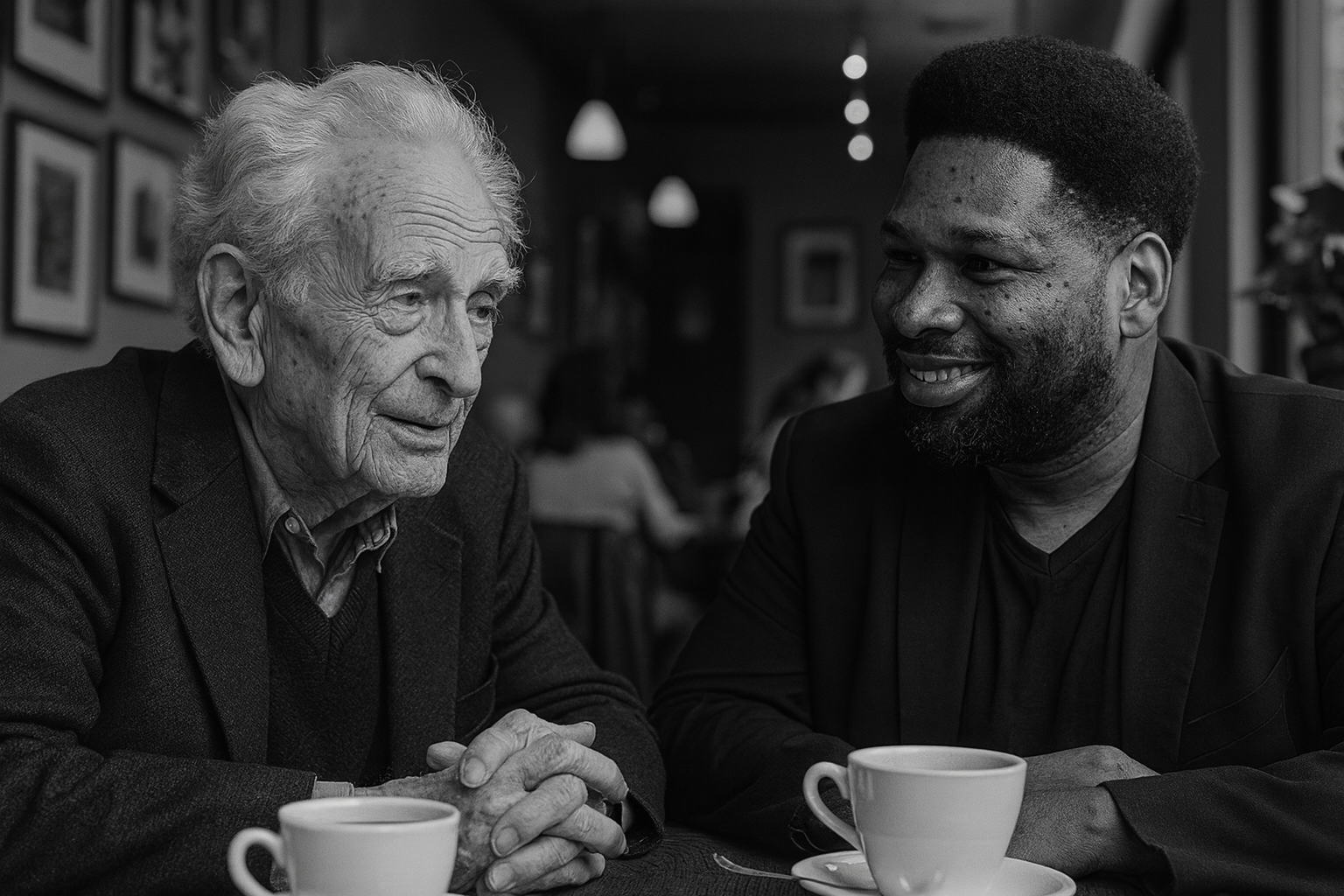
I generated this essay using ChatGPT from the debate I had with the Bunge AI concerning Scientific Humanism. Comparing Mario Bunge’s Scientific Humanism with the Enlightened Lifestyle (EL) framework, this essay highlights similarities, key differences, and the specific ways EL builds on and extends Bunge's vision. All citations are formatted in MLA style within the body of the essay.
From Rational Clarity to Embodied Wisdom: How the Enlightened Lifestyle Extends Mario Bunge’s Scientific Humanism
Introduction
Mario Bunge's Scientific Humanism stands as a rigorous defense of reason, science, and secular ethics in the pursuit of human flourishing. His work offered a robust intellectual response to the chaos of relativism, mysticism, and pseudoscience, insisting on a world governed by empirical evidence and logical consistency. However, the Enlightened Lifestyle (EL)—a 21st-century integrative framework—argues that while Bunge’s project is foundational, it is incomplete. EL proposes an expansion of Scientific Humanism by integrating phenomenological insight, introspective discipline, and affective cultivation alongside scientific inquiry. This essay explores the convergences, divergences, and how EL extends Bunge’s philosophical project into new domains of personal and societal practice.
Shared Foundations: Enlightenment Values and Scientific Rationality
At its core, both Bunge and the Enlightened Lifestyle framework are anchored in Enlightenment values. Bunge champions rationality, empiricism, and secular ethics as non-negotiable pillars of progress (Bunge, Evaluating Philosophies, 2012). Similarly, the Enlightened Lifestyle affirms these as foundational principles. EL explicitly honors the intellectual legacy of the Enlightenment—citing its advancements in liberty, reason, and skepticism—as the philosophical groundwork of its own practice (Turner, 2024).
Both frameworks also embrace methodological naturalism, the belief that knowledge about the world should be derived from observable, measurable phenomena rather than metaphysical speculation. Bunge’s work is uncompromising in this regard, arguing that science is the only legitimate path to objective knowledge (Bunge, 2006). Likewise, EL adopts naturalism as a methodological anchor, even as it opens up to more subtle dimensions of human experience through disciplined introspection rather than supernatural beliefs.
Furthermore, both frameworks are deeply humanist in orientation. Bunge’s Scientific Humanism promotes a vision of science as a moral force, insisting that it must serve human dignity, justice, and emancipation from ignorance (Bunge, Between Two Worlds, 1989). EL resonates with this impulse, advocating for human flourishing by cultivating the “critical mind” and the “wise heart” as a foundation for civic, ecological, and social renewal.
Key Differences: The Limits of Bunge’s Framework
Despite this shared philosophical bedrock, the divergence between Bunge and EL becomes pronounced in their treatment of subjectivity, emotion, and the practice of ethical development.
1. Subjectivity and Inner Experience
Bunge tends to view subjectivity as a secondary or derivative phenomenon. He upholds the distinction between primary qualities (those existing in the object, like mass and extension) and secondary qualities (those arising from interaction with a perceiver, such as taste or pain). For Bunge, scientific knowledge concerns itself primarily with the former—objective, quantifiable aspects of reality (Bunge, 1977).
The Enlightened Lifestyle does not reject this distinction but contends that it leaves out a crucial domain: the structured training of subjective awareness. According to EL, "Mind Inquiry" is a disciplined approach to examining how subjective patterns—biases, reactive thoughts, emotional distortions—can either clarify or contaminate one’s understanding of reality. EL insists that introspective awareness, while not “objective” in the traditional sense, can be investigated intersubjectively and refined through practice, dialogue, and community reflection.
2. Emotion, Grief, and Ethical Complexity
Bunge maintains a rationalist approach to ethics and science. Emotions are acknowledged but not central to his epistemology or methodology. Yet, as EL rightly points out, scientific practitioners are not immune to emotional turbulence. If a scientist’s child dies, as posed in a challenge to Bunge, does that not affect their laboratory work? EL argues that inner life—grief, attachment, fear—plays an undeniable role in how inquiry unfolds. Therefore, training for emotional literacy is not a substitute for science but a support structure for resilient and ethical investigation.
In this way, EL builds on Bunge’s realism by embedding the scientist within their full human context—not reducing them to a rational processor, but recognizing them as an affective, embodied agent shaped by social and personal experience.
3. Ethics as Cultivation, Not Just Principle
Bunge's ethics rest on secular, naturalistic grounds. He advocates for moral realism and universal human rights based on biological and social needs (Bunge, Political Philosophy, 2009). However, he essentially treats ethics as a set of rational conclusions derived from human nature and social evidence.
EL does not reject this, but asks: What trains a person to live by ethical insight, especially under pressure? It introduces practice-based ethics, which are not merely beliefs, but trained dispositions cultivated through reflective journaling, mindfulness, and interpersonal feedback. Wisdom and compassion are treated not as vague virtues, but as competencies that require structure, discipline, and community feedback.
This adds a crucial dimension to Bunge’s framework: ethics as practice, not just position.
Dynamic Integration: How EL Complements Bunge’s Methodology
The Enlightened Lifestyle introduces a compelling metaphor: prediction and control as the gas, sensing and responding as the brake. Scientific Humanism, for all its strength, overemphasizes the gas. EL provides the counterbalancing brake—not to stall progress, but to navigate complexity skillfully.
In domains of high uncertainty or chaos, such as climate breakdown, emotional trauma, or ethical conflict, the Enlightened Lifestyle suggests that traditional scientific modes of control and prediction can fail to adapt. Here, stillness, listening, and reflective perception become essential tools for sense-making. This is not a retreat into mysticism but an application of trained phenomenology as seen in contemplative science and systems leadership (Scharmer, 2016).
Moreover, EL integrates Socratic critical inquiry, derived from its adapted use of Paul and Elder’s frameworks and the Socratic Method texts, grounding questioning not just in logic, but in ethical clarity and personal humility. This creates a form of second-person epistemology—knowledge co-created through shared inquiry, where practitioners are accountable not only to logic but to one another’s well-being.
Extending Scientific Humanism into a Practice of Embodied Wisdom
Scientific Humanism, as envisioned by Bunge, is bold in its intellectual structure but thin in its praxis. The Enlightened Lifestyle answers this by turning philosophy into a daily discipline.
Some of the most powerful advancements EL offers include:
Peer-reviewed subjectivity – A model where personal insights are tested through group reflection and rational dialogue, protecting against solipsism and ideology.
The integration of civic, ecological, and narrative ethics – EL expands the domain of inquiry into areas like media, governance, and cultural systems, always asking: What sustains both inner and outer well-being?.
The role of wisdom in scientific life – EL argues that the internal habits of scientists—curiosity, patience, emotional regulation—are not accidental to science but necessary for its ethical advancement.
Secular contemplative development – Rather than rejecting contemplation as unscientific, EL reclaims it as a naturalized practice of attention and inquiry, grounded in the realities of the mind-body system.
Conclusion: From the First to the Second Enlightenment
Mario Bunge’s Scientific Humanism remains one of the most lucid and ethically grounded articulations of 20th-century secular philosophy. Its defense of realism, rationality, and human dignity laid the foundation for a science-guided ethics. However, in today’s world of complexity, cognitive overload, and emotional volatility, the Enlightened Lifestyle necessitates an expansion. EL extends Bunge’s vision into the inner landscape of the scientist, embedding ethical responsibility not only in principle, but in practice.
Where Bunge cleared the ground of metaphysical and mystical debris, the Enlightened Lifestyle plants new seeds—disciplining intuition, cultivating compassion, and restoring the role of reflective practice within naturalistic inquiry. It seeks not to abandon reason but to humanize it, ensuring that our pursuit of what is true never outpaces our capacity to live it well.
In this sense, the Enlightened Lifestyle is not a rejection of Scientific Humanism, but its next chapter—a bridge from the First Enlightenment to what may one day be remembered as the Second.
Works Cited
Bunge, Mario. Between Two Worlds: Memoirs of a Philosopher-Scientist. Springer, 1989.
Bunge, Mario. Evaluating Philosophies. Springer, 2012.
Bunge, Mario. Political Philosophy: Fact, Fiction, and Vision. Springer, 2009.
Bunge, Mario. Treatise on Basic Philosophy: Volume 1: Semantics I: Sense and Reference. Springer, 1974.
Bunge, Mario. Chasing Reality: Strife over Realism. University of Toronto Press, 2006.
Farnsworth, Ward. The Socratic Method: A Practitioner’s Handbook. David R. Godine, 2021.
Paul, Richard, and Linda Elder. Critical Thinking: Tools for Taking Charge of Your Professional and Personal Life. 2nd ed., Pearson Education, 2013.
Scharmer, C. Otto. Theory U: Leading from the Future as It Emerges. 2nd ed., Berrett-Koehler, 2016.
Thinknetic. The Socratic Way of Questioning: How to Use Socrates’ Method to Discover the Truth and Argue Wisely (Critical Thinking & Logic Mastery). Thinknetic Publishing, 2021.
Turner, Dathane. The Enlightened Lifestyle Book (Official Copy 11.30.25). Enlightened Lifestyle Institute, 2025.
