
A Respectful Critique: Won Buddhism, & Universal Consciousness.

Wikimedia Commons
Introduction
Modern Buddhist movements deserve serious, respectful engagement—especially when they attempt to translate the Dharma for contemporary life. Won Buddhism, founded by Master Sotaesan, represents one such effort. Its emphasis on integration, ethics, and daily practice is admirable. Yet its use of language such as Universal Consciousness or One Mind raises an important doctrinal concern: does this framing subtly reintroduce what the Buddha carefully dismantled?
This critique is not dismissive, but discerning.
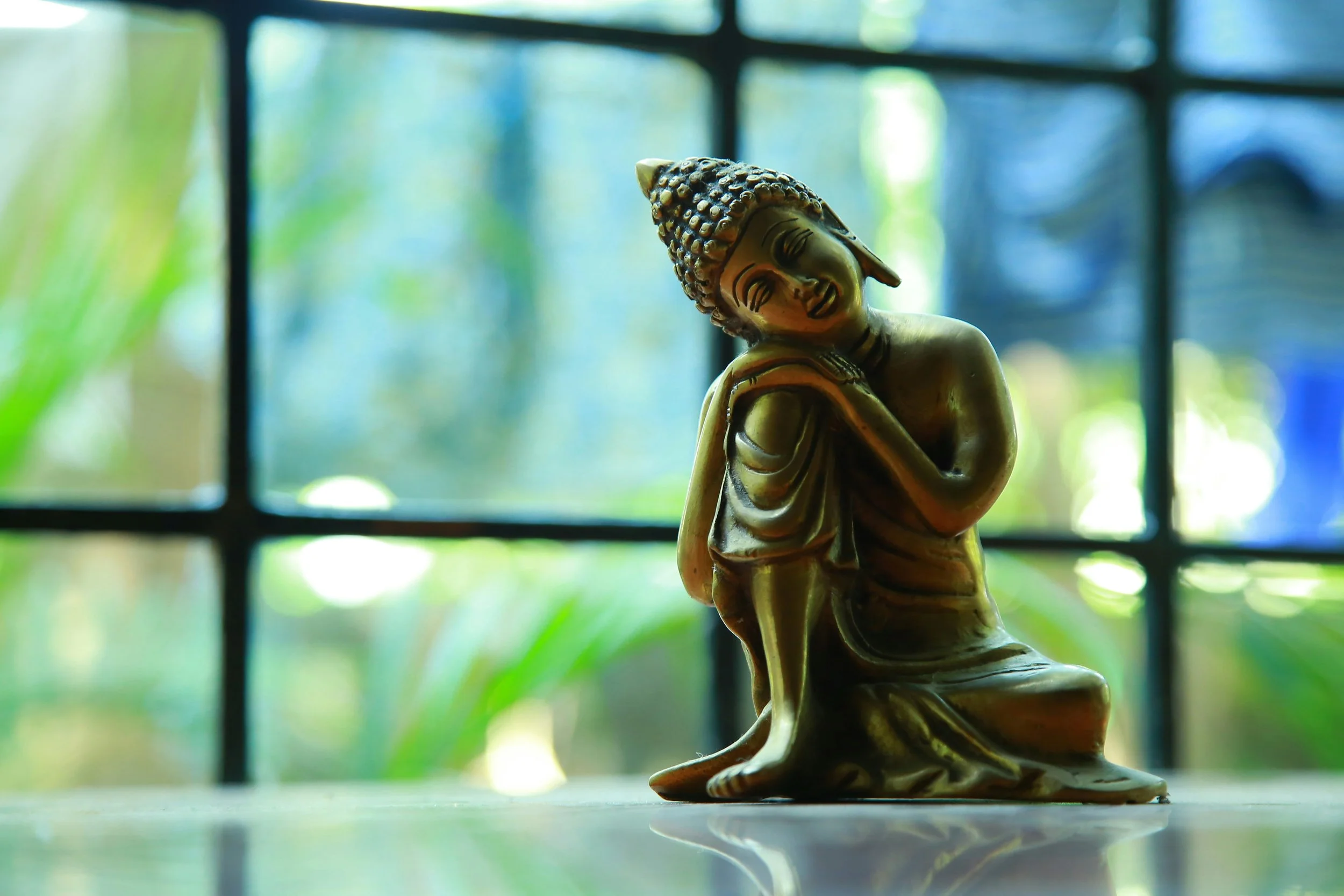
Artist Wilsan on Unsplash
The Buddha’s Caution: Consciousness Is Conditioned
In early Buddhism, Gautama Buddha consistently taught that consciousness (viññāṇa) arises dependent on causes and conditions. It is impermanent, contingent, and not-self. This point is made emphatically in the Buddha’s chastisement of Sati, who believed consciousness persisted unchanged across lives. The Buddha rejected this view precisely because it creates a subtle self—refined, abstract, yet still something to cling to.
The core danger is not crude eternalism, but metaphysical refuge: turning process into principle, and insight into identity.
Won Buddhism and “One Mind”
Master Sotaesan’s defense is thoughtful: One Mind is intended as a skillful means, not a metaphysical claim. It functions pedagogically—to counter nihilism, fragmentation, and moral collapse in modern society. When understood as empty, dynamic, and interdependent, it can orient ethical life and integration.
However, the critique remains:
When impermanent, empty, dynamic reality is linguistically equated with universal consciousness, many practitioners—especially modern, abstraction-prone minds—will hear something enduring, something behind experience, or something I truly am. This is precisely the confusion the Buddha sought to avoid.
Intent does not erase effect.

Artist Jason Leunglo_on Unsplash
A Parallel Risk: Buddha-Nature Language
This concern extends beyond Won Buddhism. Mahāyāna notions of Buddha-nature, when insufficiently grounded in emptiness, can also be misunderstood as an inner essence. While later traditions often clarify this as a teaching device, the risk remains the same: emptiness becomes a thing; freedom becomes identity.
The Buddha’s method was more austere—and arguably more precise.

Artist Kamal Srinivas on Unsplash.
The Enlightened Lifestyle (EL) Perspective
The Enlightened Lifestyle aligns with this caution. EL deliberately avoids Universal Consciousness language—not because insight or depth is denied, but because precision matters. EL works with:
Process, not substance
Awareness-as-activity, not awareness-as-entity
Cause & effect, habit loops, and conditioning, not metaphysical ground
Ethical feedback systems, not cosmic identity
Emptiness is taught functionally: nothing stands alone; everything conditions everything. When understanding matures, language naturally quiets. If a concept increases metaphysical speculation, identity formation, or spiritual bypassing, it fails the test.

Benjamin Davies on Unsplash
Conclusion: Precision Is Compassion
Won Buddhism’s intention is compassionate and historically understandable. Yet in the Dharma, slight confusion matters. The Buddha was uncompromising not out of rigidity, but out of care: even refined views can bind.
The Enlightened Lifestyle affirms this restraint. Liberation is not found by redefining the self more subtly, but by seeing that no footing for self—gross or refined—can be found at all.
That absence is not bleak.
It is freedom.
